Thomas Hauck
Toggle Menu

Your Novel May Not Be Real, But It Must Be Believable!

In storytelling and novel writing, there is a big difference between what is objectively real and what is believable.

This is the two-part rule:

1. Nothing in your story needs to be real.

2. Everything in your story must be believable.

What do I mean by “real?” As a former philosophy major in college, I can tell you that since the days of Socrates, this has been a topic of vigorous debate! People argue endlessly about what is real. Some insist that ghosts are real. Others say that Covid-19 is not real. And you only need to turn on Fox News to get a big dose of “facts” that seem far from real.

Let’s try to find a definition as it pertains to fiction writing. As I see it, a story element that is “real” is one that the ordinary person would observe or have knowledge of in everyday life, and which ties the story to life as we recognize it. For example, a housecat is a real animal. But a housecat with wings is not real. The housecats that we see every day, and which live on earth, do not have wings.

But could you write a fantasy story featuring a housecat with wings? Of course you could! It all depends on the context and what the reader expects. As an artist, you have the freedom to imagine any kind of universe you want, and populate it with any variety of feline, winged or otherwise. But you need to ensure your reader understands and accepts that your winged cat inhabits a universe where such things are normal.

Get a Laugh at Any Cost

To me, playing fast and loose with reality becomes a problem when the author puts his characters in a contrived situation to make fun of them, and the author clearly doesn’t know what he’s talking about. Recently I read a novel—a purported comedy from a major publisher—set in contemporary Los Angeles. The protagonist is a professional plumber by trade, who specializes in unclogging drain pipes. This is a real profession that real people do. The setup is that a wealthy woman has a clogged outflow pipe from her house. It’s described as a clay pipe invaded by roots from a nearby ficus hedge. The plumber and his partner start digging in a specific place.

Problem 1: How does the plumber know the exact location of the clog? This is a minor but irritating detail. By some divination, he and his partner know exactly where to dig.

The author then describes how the bumbling duo spend “all morning” digging a five-foot trench on either side of the pipe.

Problem 2: Any normal plumber would get a backhoe and dig the trench in fifteen minutes. But I suppose the author thought it would be funnier if the incompetent pair spent all morning using hand shovels to perform this simple, routine task. And anyway, if the homeowner had an antique clay pipe running under their lawn, the plumber would excavate the entire length of the clay pipe, from the foundation of the house all the way to the street, and replace it with PVC pipe.

In the scene, the plumber then puts on “ear mufflers” (whatever those are) and uses a chainsaw to cut the clay pipe.

Problem 3: This is ridiculous. With a little bit of research, the author would have learned the proper tool for cutting buried sewer pipe is a soil pipe cutter. This is a simple manual tool, with no engine and no ear protection required.

With the pipe now cut open, of course you know what happens next: The lady inside the house flushes the toilet. According to the author, the sewer water comes gushing out of the gaping pipe with such tremendous force that a “geyser” erupts, “exploding” with tremendous force all over the chest and face of his partner, who is standing in the trench, which is probably only a few feet deep.

Problem 4: Again, this is preposterous. Home outflow lines operate by gravity, not some sort of pressure system. When the lady of the house flushed her toilet, the stinky water—perhaps a gallon or two maximum—would come dribbling out of the pipe. If the house were elevated, you might say it came pouring out. In any case, if you were inattentive and standing downstream in the trench, it might soak your work boots, but nothing more.

And then comes the tragic end: Somehow, this terrible crisis, capped by his face drenched in raw sewage, is enough to give the plumber’s partner a heart attack, and he drops dead on the spot. The whole sorry episode is just not believable.

You might say, “Hey, take it easy! It’s just a funny scene. Let the author have some creative license.”

To that I reply, “No. The author has not intended to create an alternative, magic universe, with different rules about real life. Neither is this a kids’ slapstick cartoon book, like Captain Underpants. It’s a novel with literary pretensions. The author wants his story to be set in the real world, and when creating his comic scene, he has simply been lazy. He doesn’t know the first thing about the factual underpinnings of the scene he invented, and he assumes we don’t either.”

There is a reason why truly great writers like Stephen King go to great lengths to research and understand the subjects they write about. They want their stories to be believable. They want them to seem real, and they don’t condescend to the reader. In too many literary efforts today, I see a relentless drive to be clever regardless of the relationship of art to real life. It’s like seeing a building with gaudy ornamentation and frothy details, and when you look closer you see the underlying structure is made out of cheap plywood.
Thomas Hauck, author, book developer
Posted in Book Reviews, Essays, Grammar and Writing Skills, Novels | Tagged , , , | Leave a comment

“Becoming Invaluable” Is an Invaluable Self-Help Book!

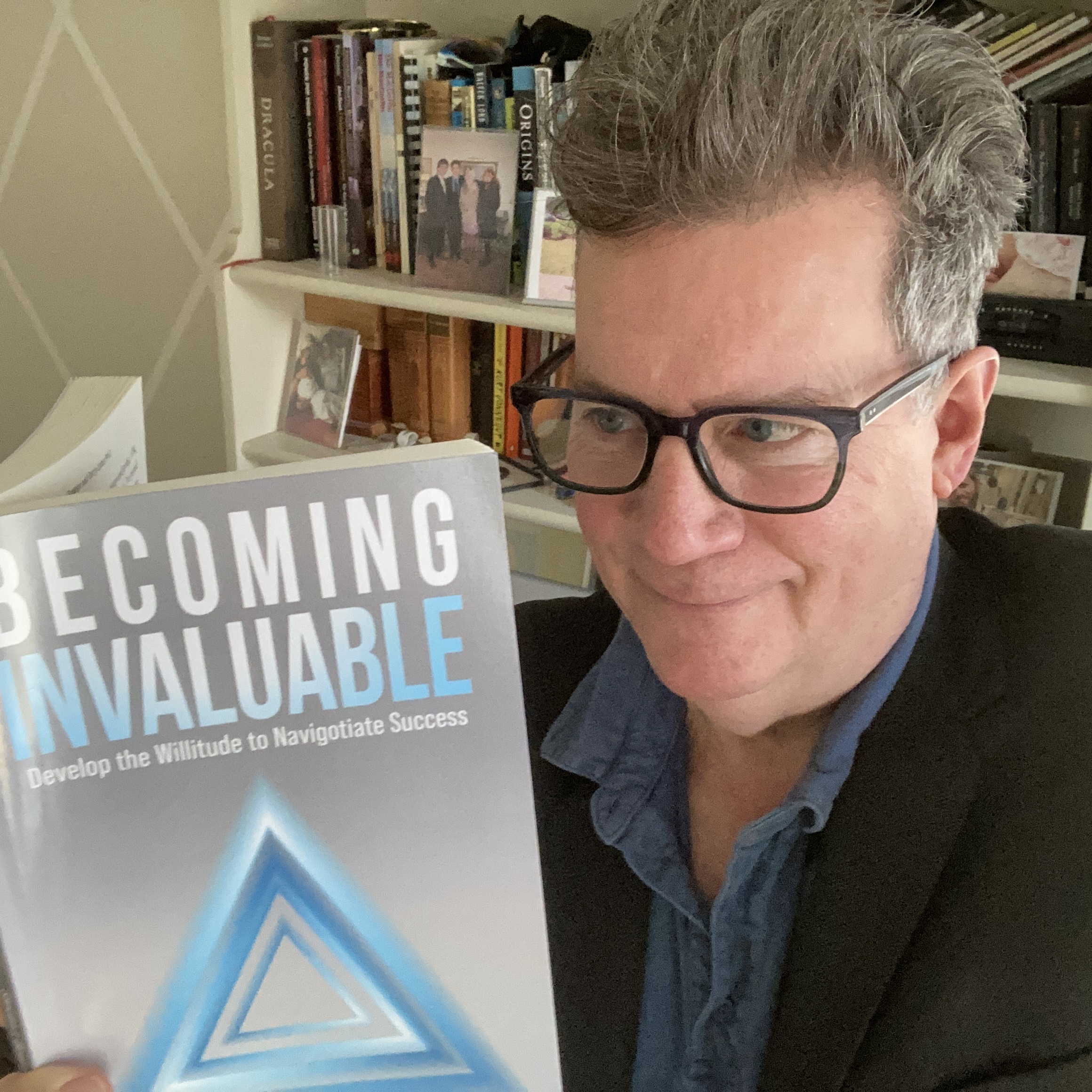
Congratulations to my valued clients Steven J. Bowen and Terry Lyles, Ph.D., on the publication of their new book, Becoming Invaluable: Develop the Willitude to Navigotiate Success.

What does it mean to be invaluable? The authors suggest that it’s entirely up to you to decide how, and in what way, you can be invaluable to your fellow human beings. It might mean becoming the CEO of a big corporation; it might mean becoming a doctor and helping people live longer and healthier lives; or it might mean becoming a singer like Taylor Swift and entertaining millions of people.

But it also might mean making just one person’s life better – a child, a patient, a neighbor.

In all of these choices the common element is that you are serving other people and helping make their lives better, whether it’s millions of people, a handful in your family, or just one person.

You will also notice that Steven and Terry enjoy using and making up new words. For example, “willitude” is a combination of “willpower” and “fortitude.” “Navigotiate” is a combination of “navigate” and “negotiate.”

Find Your Value

Becoming Invaluable begins with your first task, which is to find your value. Nobody can do this for you; you have to do it for yourself. And when you find your value, you should pursue it. To become invaluable, you need to develop your five personal attributes. They are knowledge, skills, attitude, health, and strength. You need a vision for your life and the mission. You should also embrace the concept of servant leadership.

The authors discuss the importance of your daily health and strength, and how to watch out for the warning signs of low self-worth, which is just as bad as having an inflated ego.

The book is liberally peppered with profiles of successful people who were interviewed by Steven and Terry expressly for this project. For example, one of them is Jason Johnson, the co-founder and CEO of Exclusive Charter Service, also known as ECS Jets, which provides 24/7 global aircraft charters. He made himself and his company invaluable to his demanding clients by paying attention to the smallest details. For example, he went to Bed, Bath & Beyond and bought inexpensive cotton towels with initials are already embroidered on them. Before every flight, he would place in the bathroom of the aircraft the towel with the correct initial of the client. It’s a small gesture that his clients truly appreciated. And of course, Jason also made sure to take care of the fundamentals, which is to transport his clients safely and comfortably to their destinations!

Published by MindStir Media, Becoming Invaluable is available on Amazon and at Mindstirmedia.com.

Thomas Hauck reads “Becoming Invaluable”
Posted in Book Reviews, Books Developed by Thomas Hauck, Business Books, Self-Help Books | Tagged , | Leave a comment

Write a Book and Rise Above the Crowd

We live and work in a business environment that is intensely competitive. Top-tier business schools churn out thousands of new graduates every year, all looking to make their mark in the corporate world. New hires fight their way up the ladder to become managers. Managers compete for the few available roles as directors or vice presidents. As you near the pinnacle, the rivalries become more intense. And even if you snare the top prize as CEO or president, you know that the wolves are nipping at your heels, looking for a sign of weakness.

If you’re a consultant or solo entrepreneur, the pressure is just as intense, because your clients are fickle and ready to jump to a competitor offering a better deal or more prestige.

Did I say prestige?

Yes! These days, many hiring and contracting decisions are made on the basis of the perceived prestige of the potential partner. People want to be associated with a winner. They want to bask in the reflected glory of an industry leader. They want the very best—and are willing to pay the price.

Successful Authors Are Experts

It’s an axiom that publishing a successful book puts you on a level higher than people who have not written a book. By writing a book on your professional area of expertise, you establish yourself as the expert in your field. If you don’t believe me, think about the books that Jack Welch, former chairman and CEO of GE, wrote. Published in 2001, his first one was called Jack: Straight from the Gut. It was followed by Winning, written with Suzy Welch, in 2005. It reached No. 1 on The Wall Street Journal bestseller list and appeared on the New York Times Best Seller list.

These books and others established Jack Welch as the preeminent expert on corporate leadership in the early 21st century. He had retired from GE in 2001, but you would never have known it by his soaring public profile. In 2009, Welch founded the Jack Welch Management Institute (JWMI), a program at Chancellor University that offered an online executive master of business administration. He taught at MIT Sloan School of Management and conducted seminars for CEOs all over the world. He had a reputation as a leader, and he made the most of it.

Take the Next Step in Your Career

If you’ve reached a plateau in your professional career and don’t see a way to get higher, becoming an author is how you can take that next step up the ladder. A book is the most powerful “door opener” there is. It elevates you in a way nothing else can.

But you need to be very careful, because you cannot just slap a cover on a collection of your blog posts or—even worse—fill the pages with AI-generated filler. If you do that, your plan will actually backfire. You’ll be perceived as a hack and an amateur. You don’t want that!

Your non-fiction self-help or business book must offer real value to your reader. You must deliver solid, actionable information. You must identify a specific problem faced by your reader, provide a solution, and back up your solution with proof, either from your own experience or from case studies. Stories are the most powerful teaching tools, and you need them in your book!

With a high-quality, professionally researched and written book, you’ll have access to media platforms such as television, radio, YouTube, Twitter (X). You’ll be invited to give lectures and TED talks. Influential people will regard you as their equal and come to you for advice. You could hold your own seminars. Your fees for your services will go up.

Writing a book can be one of the best investments you can make in your career and professional future. And with the right professional help from a qualified editor or ghostwriter, it can be an enjoyable experience as well!

Thomas Hauck author
Thomas Hauck, book developer and ghostwriter.
Posted in Advice on Hiring a Ghostwriter, Business Books, Self-Help Books | Tagged , , , , , | Leave a comment

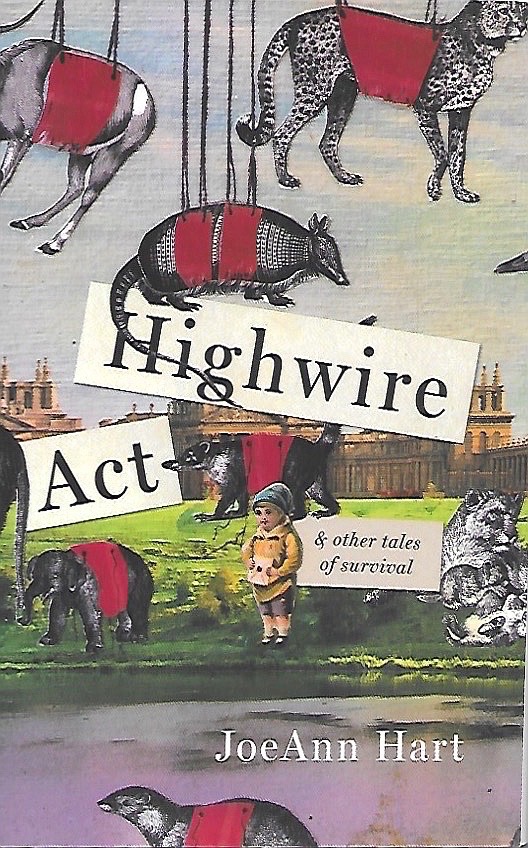
“Highwire Act & Other Tales of Survival” by JoeAnn Hart

Gloucester author JoeAnn Hart has a new book out, and it’s good news for lovers of sharply written and keenly observed short stories.

During the past decade and half, she’s built a name for herself in the literary world. Her debut novel, Addled, was published in 2007 by the venerable house of Little, Brown. It painted a painfully funny picture of the denizens of the Eden Rock Country Club, beset by a flock of Hitchockian geese. Her next effort, which also made waves, was Float (Ashland Creek Press, 2013), set in a funky seaside town gripped by the climate crisis. In 2019 she delivered Stamford ’76 (University of Iowa Press), a ripped-from-the-headlines novel based on a brutal murder in JoeAnn’s social circle.

Her newest is Highwire Act & Other Tales of Survival, published by Black Lawrence Press in September 2023. It’s a collection of funny, fierce, and fabulous short stories, framed by our current climate crisis (a theme on which JoeAnn has become a literary authority). The stories are varied: A homeless man contemplates an infant’s grave from the Westward Expansion; a young couple raise crickets for food; a woman in a caged complex is witness to the deterioration of her neighbor; a college student argues over ethical eating with her parents; and a woman dying of Covid-19 watches the birds from her hospital window.

Some of the stories are set in the real world while others foretell a strange, speculative future. The startling metaphors are firmly rooted in nature imagery, as in “worries began to bloom like algae in a stagnant pond.”

The eighteen tales are like polished golden nuggets, with sparkling prose, glossy weight, and true value. Pick up a copy of Highwire Act & Other Tales of Survival and read it. It will make you smarter and you’ll feel like you’ve spent your time wisely.

Highwire Act & Other Tales of Survival by JoeAnn Hart
Posted in Book Reviews | Tagged , | Leave a comment

Best Selling Business and Leadership Books Often Tell Stories

 If you’re thinking about writing a business book (or hiring a ghostwriter to do it for you), you might assume that you want either expository writing or persuasive writing. Expository writing is when you explain a concept or share information, such as, “There are many types of funding available, including angel investors.” Persuasive writing is when you try to convince the reader of your point of view using facts, such as, “Surveys show that consumers strongly prefer products with a free return policy, which you should strive to institute in your marketing plan.” You then back up your claim with a real-life example, such as a verified success story from a well-known entrepreneur.

These are both valid and useful approaches. But as a professional ghostwriter of many best-selling business books, I can tell you that some of the most successful management and leadership books are built around narrative and creative writing, particularly in the form of fictional stories. Fables, if you will. This is because for thousands of years, stories have been recognized as the most effective way to teach somebody something. Think about Aesop’s fables, or stories from the Bible that provide moral instruction. One of today’s most successful business books is Who Moved My Cheese?, a short fable about the way people react to major change in their work and life, featuring two mice and two “Littlepeople” as they hunt for their missing cheese.

If you’re going to write a fable that teaches a lesson, you can populate your story with either humans or animals – or even a combination of both.

Human Stories

I’ve ghostwritten many business and leadership books that feature fictional human characters confronted with a challenge, and which explore how they respond and rise above it (or not). The story might revolve around a manager who gets promoted to a leadership position, and he or she feels they’re not prepared to take on the responsibility. Other stories involve an office facing a crisis, such as a sales slump or a threat from a competitor, and how different people in the office respond. One manager wants to try to increase sales, another advocates for a new product, a third says they should sell out to the competitor, and so on. Having a cast of conflicting characters allows the author to work through various scenarios and solutions in an entertaining way.

The very first fictional business book I ever helped develop was in 2009, and it was called Dangerous Law Practice Myths, Lies, and Stupidity, by Judd Kessler and others. Mr. Kessler was in the business of selling law firm software, and the book took the form of a series of short stories revealing common law practice mistakes in their operations and how the proper software would prevent them. It’s a fun and easy-to-read book, and after nearly 15 years it’s ranked #75 in Amazon’s Law Office Marketing & Advertising (Books) category. Not bad!

Animal Stories

If you take your crisis or conflict out of the human realm and make your characters animals, you can often get more freedom to explore your topic. A terrific example of this is The Path to Leadership by my valued client, Ronnell Crittendon. Here, a young lion named Maximus is disappointed when the Council passes over him and names another lion to lead the pride. Maximus goes away to sulk, and meets Busy Beetle, who has no time for Maximus’s whining. Busy Beetle urges Maximus to embark on a journey to see Ancient Raven, and along the way Maximus learns many valuable lessons about life and leadership.

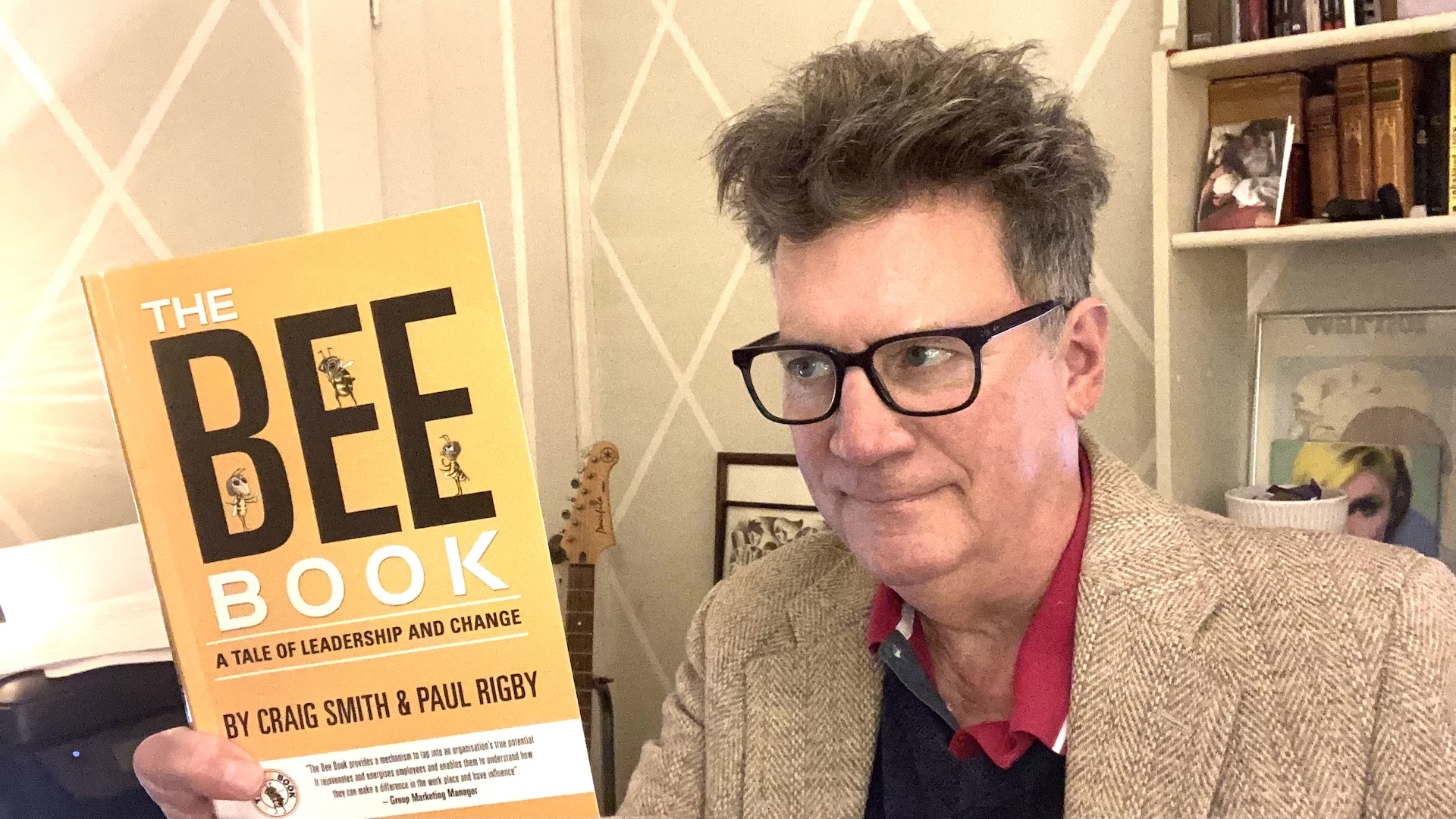
Another highly recommended animal leadership book is simply called The Bee Book: A Tale of Leadership and Change. My clients Paul Rigby and Craig Smith have turned their little fable into a best-selling book and a global business enterprise. Here, a hive of bees is faced with a catastrophic change in their environment: Farmer John has plowed under the vast field of wildflowers on which the hive depends. Nothing but barren dirt remains. If they are to survive, the bees in the Sola hive need to take quick action. But are they capable of adapting to the challenges presented, or will they be stuck in a world of paralysis and complacency? The main characters – Buzz, Stripes, Hover, Greybee, Queen Luna, Queen Sola, Mr. Wingit, Zippy, and others – represent typical employees in any organization, with a variety of attitudes and responses to the challenge. Like Who Moved My Cheese?, The Bee Book is short – you can read it cover to cover in about an hour – and it’s written in language that anyone can understand. But its simple lessons lend themselves well to group discussions and to learning.

There are many more! And by the way (not to sound snarky), but you cannot get a fictional business book – especially one featuring animals – from Chat GPT or any other AI algorithm. A fable is just not in their training to produce. If you want to use AI to write boring blog posts and other internet SEO filler, that’s fine – but authors who want to make a difference and impact their readers always hire a professional ghostwriter or editor.

Thomas Hauck, ghostwriter and author, reads The Bee Book.
Posted in Advice on Hiring a Ghostwriter, Books Developed by Thomas Hauck, Business Books, Essays | Tagged , , , , , , | Leave a comment

If Paperback Books Didn’t Exist, We’d Invent Them

On November 19, 2007, Jeff Bezos, the founder and CEO of Amazon.com, personally introduced the Kindle e-reader at a gala event in New York City. Despite its bulky appearance, the device was heralded as a disruptive technology that could wipe out the need for old-fashioned printed books, both hardcover and paperback. It came with 90,000 titles already available, and the initial inventory sold out in six hours. A few years later, Amazon launched Android and iOS versions.

Today, Amazon has sold about 500 million Kindle devices and has a reported 3 million Kindle Unlimited subscribers. In 2020, consumers spent over $400 million on e-books. By any measure, the Kindle and other e-readers have become ubiquitous in the marketplace and American homes and offices.

Readers Are Buying More Print Books Than Ever

You might think that the Kindle would have wiped out physical printed books, the way the word processor wiped out the typewriter. But this has not happened. According to Statista, sales of print books have held steady and have even grown in the past decade. In 2008 they reached a peak of 778 million units, and then (predictably, perhaps) declined until 2012, reaching a low point of 591 units. But then something interesting happened. Like vinyl records, print books came surging back, and in 2021 hit a peak of 843.1 million units sold! The dominant form was the good ol’ trade paperback, which accounted for 60 percent of all sales.

Take a Walk on the Beach and You’ll See Why

I’m fortunate to live in Gloucester, Massachusetts, within walking distance of several beautiful public beaches. This summer, during my usual ramblings, I saw many people, whether lying on their towels or sitting on folding chairs, reading books. These were invariably printed paperback or even hardcover books, both fiction and non-fiction. Of course, this made perfect sense. You can throw a paperback book in your beach bag without worrying about whether it’s sufficiently charged. You can read it in the brightest sunlight. You can toss it on the sand and then just shake it off. If it gets wet, just let it dry in the sun.

Printed books have other advantages. You can flip through the pages easily. You can write in it. You can take a paperback and fold it to cram it in your pocket or bag. Back in 1939, the aptly named Pocket Books – now owned by Simon & Schuster – produced the first mass-market, pocket-sized paperback books in the United States, and revolutionized the publishing industry.

And there’s one other important feature of printed books: They feel good in your hand. They deliver a pleasurable visual and tactile experience. They have heft and a physical presence that seems to connect you with the story.

So if we didn’t have the humble but noble paperback book – the bringer of dreams and stories, the door to new worlds and magical experiences – we’d surely have to invent it!

Thomas Hauck, avid reader of paperback books
Posted in Uncategorized | Tagged , , , | Leave a comment

Great Books Allow – And Even Invite – Repeated Readings

When I read a book, and I like it, I’m inclined to read it again. And again. Just like you’d listen to a favorite record over and over, until the grooves are so worn you have to buy another copy.

I hear about people who say they read a book a day, or every two days, and their library shelf groans under the weight of all the tomes they’ve collected. Perhaps I’m not the brightest bulb on the Christmas tree, but I just don’t see how anyone could truly understand and absorb any good book in just one reading.

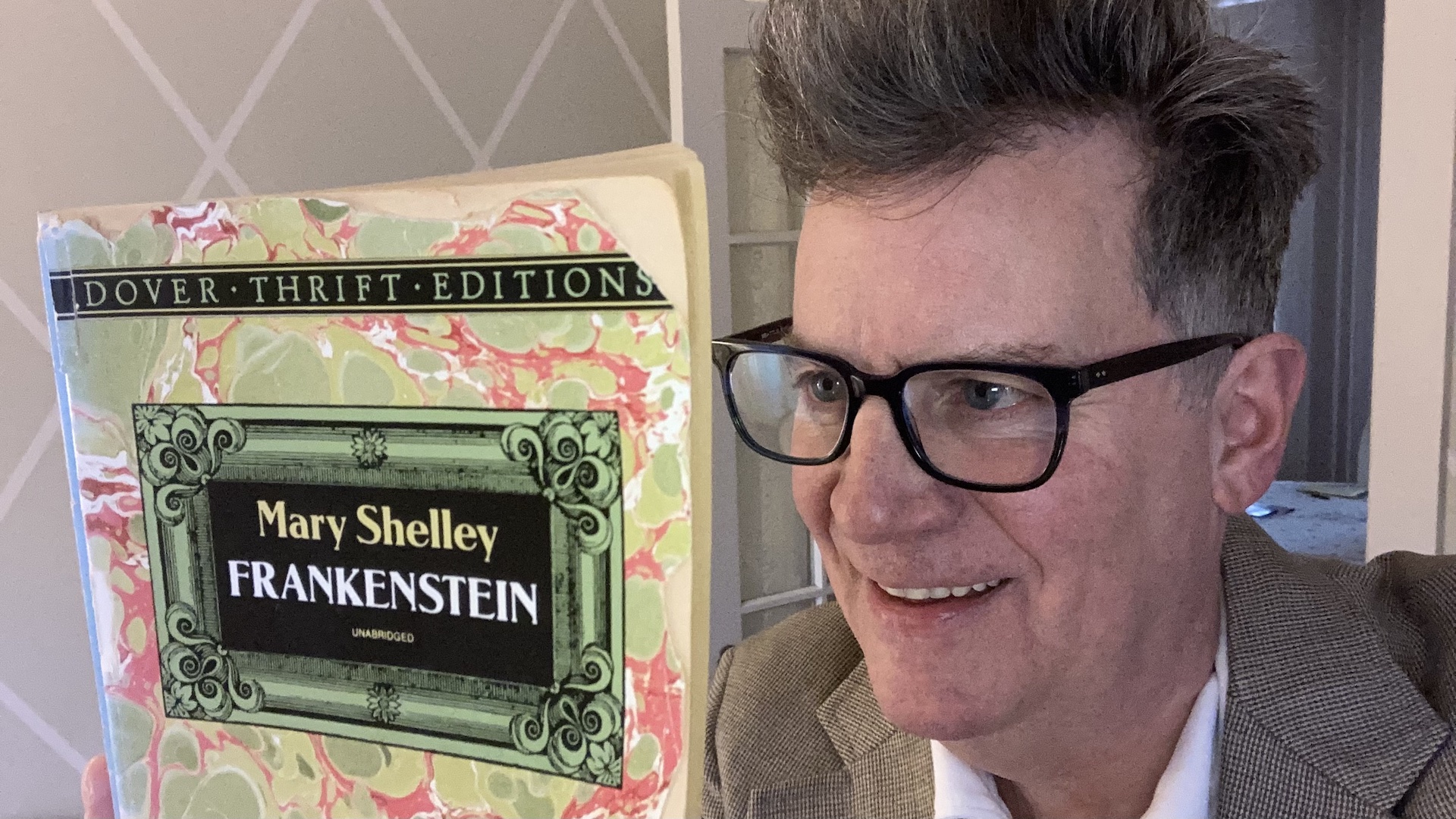
My all-time favorite book? It’s Frankenstein, by Mary Shelley. It’s about 75,000 words and takes me about four hours to read. Regarding this book, I’ve developed an odd habit: whenever I fly in an airplane, which is only about twice a year, I bring my tattered Dover Thrift Edition (1994) along and, once airborne, open it to any random page and start reading. Over the years, I’ve probably read it cover to cover fifty times. Why? To me, aside from The Odyssey, it’s the greatest thriller ever written, and it tackles the most profound themes of human existence. It makes me think about parents and children, about God’s obligation to his human creations (personally, I’m thoroughly agnostic), and about revenge and justice. A great book hits you on two levels: It’s a pleasure to read and it gives you something to think about.

Other perennial favorites include the aforementioned The Odyssey (especially the final scenes after Odysseus returns to Ithaca and plots his conquest of the Suitors), an edition of One Thousand and One Arabian Nights by Geraldine McCaughrean, Cannery Row and The Grapes of Wrath (Steinbeck), The Sun Also Rises (Hemingway), Resurrection (Tolstoy), The Big Sleep (Chandler), and a couple of Stephen King novels.

I’ve re-read The Goldfinch (Tartt), Gone Girl (Flynn), The Tiger’s Wife (Obreht), Underground Railroad (Whitehead). Right now I’m reading The Hours by Michael Cunningham. There are many more, but you get the idea. These books stand up to repeated readings and even offer more each time. And perhaps most importantly, they do not yield all their secrets with the first reading – or even the fifth.

Thomas Hauck – Book Reader
Posted in Essays, Novels | Tagged , , , | Leave a comment

In Defense of “Take Action” Instead of “Act”

AI-powered grammar checkers and proofreaders such as Grammarly have become ubiquitous. To be fair, for the routine review of typos, spelling errors, and other obvious writing defects, these tools can be useful.

Once in a while, a valued client will take a piece I’ve edited or ghostwritten and run it through Grammarly. This is to check up on my work, I suppose. Because I have confidence in the quality of the manuscripts I deliver, I have no problem with that. But there’s one annoying change that Grammarly always insists upon. If you say something like, “When your plan is complete, the next step is to take action,” the algorithm will always demand that you change the idiom “take action” to “act.” It wants you to say, “When your plan is complete, the next step is to act.” There are no exceptions.

I don’t like this. First of all, “act” sounds inelegant and abrupt. As the final word in the sentence, it feels incomplete, like someone snipped away the last phrase. But more importantly, the verb “to act” has many meanings. One of the most widely used is “to perform dramatically,” such as, “I want to act in the play, and I hope the director will cast me as Hamlet.” It also means to behave in a certain way, often with a lack of sincerity, such as, “He always seems to act friendly, even when he’s spreading the most vile gossip.” And there’s the usage currently in vogue with harried parents: “When Jimmy eats too much sugary food, he starts to act out.”

That Split-Second Pause of Confusion

Personally, I believe the author should strive to make the reading experience as seamless and smooth as possible. (Not all authors share this view! Many of the more literary sort delight in making the reader navigate an obstacle course of dense and tangled syntax.) When I read something like, “When the situation becomes dangerous, it’s time to act,” I involuntarily stop and scratch my head. It’s time to act? What exactly does that mean?

That split-second pause of confusion is not what you want. It puts the brakes on your reader and introduces tension.

I believe that the idiom “take action” is quite useful. It has only one meaning: It’s time to do something, and to go from being passive to being kinetic. It means to change the current situation and get a different result. I’ll admit the verb “take” is imprecise. Maybe it should be more exact, such as “initiate action.” But that sounds too formal, like military jargon. And that’s what an idiom is: It may not stand up to close scrutiny, but it works because we all agree it works.

Somewhere, at some time, the person teaching the Grammarly AI algorithm instructed it to reject “to take action” and replace it with “to act.” Sorry – this human editor begs to differ, and when I see such a change, I take action!

Thomas Hauck, best-selling ghostwriter and book developer
Thomas Hauck, professional book developer and ghostwriter – and human editor.
Posted in Essays, Grammar and Writing Skills | Leave a comment

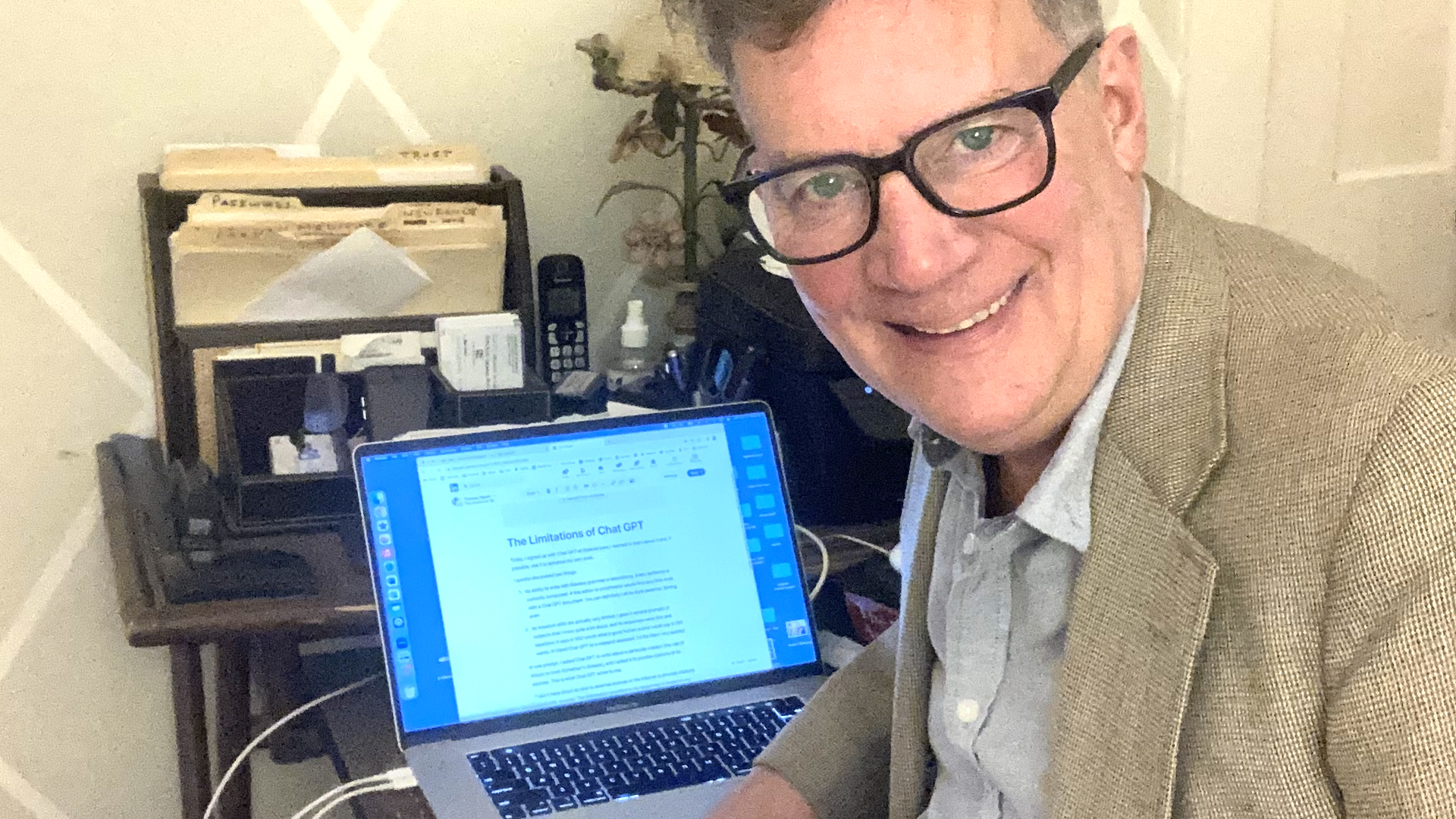
The Significant Limitations of Chat GPT

Today, I signed up with Chat GPT at OpenAI.com. I wanted to learn about it and, if possible, use it to enhance my own work.

I quickly discovered two things.

  1. Its ability to write with flawless grammar is astonishing. Every sentence is correctly composed. A line editor or proofreader would find very little work with a Chat GPT document. You can definitely call its style pedantic. Boring, even.
  2. Its research skills are actually very limited. I gave it several prompts of subjects that I know quite a lot about, and its responses were thin and repetitive. It says in 500 words what a good human author could say in 100 words. If I hired Chat GPT as a research assistant, I’d fire them very quickly!

In one prompt, I asked Chat GPT to write about a very specific subject – the use of lithium to treat Alzheimer’s disease. I asked it to provide citations of its sources. This is what Chat GPT wrote to me:

“I don’t have direct access to external sources or the internet to provide citations or specific sources. The information provided in my responses is based on my training data, which includes a wide range of general knowledge up until January 2022. If you have specific questions or need information on a particular topic, please feel free to ask, and I’ll do my best to provide accurate and informative responses based on the knowledge within my training data.”

Chat GPT Can’t Go Online. Its Knowledge Ends at January 2022!

Chat GPT doesn’t have access to the internet! I thought this was astonishing. I assumed that was the whole point of Chat GPT – it would go online and ferret out information about your subject, like a Google search would. Instead, it has only its training data, which ends at January 2022. So for fun, I asked it about the 2023 Super Bowl game. It replied:

“I’m sorry, but I don’t have access to real-time information or events that occurred after my last knowledge update in January 2022. Therefore, I cannot provide specific details about the 2023 Super Bowl game or any events that have taken place since then.

“To learn about the 2023 Super Bowl game, I recommend checking the latest news sources, sports websites, or official NFL sources for up-to-date information on the teams, players, and game outcomes. You can also consider searching for articles, videos, or social media updates to get the most recent and accurate information about the game and any related events.”

Pretty weak sauce, I’d say! Chat GPT is looking more like Rip Van Winkle. If you want to take a walk down memory lane, it might be helpful; but as for current events and knowledge? Fuggetaboutit!

Thomas Hauck, ghostwriter
Posted in Essays, News | Tagged , , | Leave a comment

The Secret to a Great Opening Sentence in Your Novel

“Call me Ishmael.”

Thus reads one of the most famous – and, by writers of fiction, envied – opening sentences in Western literature. It launches Moby-Dick, and those three words are memorable because they provide information about the protagonist. The reader learns that Ishmael is apparently not his real name, and the would-be sailor identifies with the biblical character who is perhaps best known for wandering in the desert and nearly dying of thirst before his miraculous rescue. Herman Melville’s protagonist similarly wanders the seas, and as we learn at the end of the book, his miraculous rescue comes after his ship is sunk by the angry whale. If you’re familiar with Bible characters (as most of Melville’s readers in 1851 would have been), the author is giving a hint of the ending of the book.

Grab That Reader Before She Gets Away!

It’s an axiom that if you’re a relatively unknown author, readers – particularly literary agents, who guard the gates to the big publishers – want to get “hooked” on your book on the first page. No, make that the first paragraph! Busy editors and agents have little time, and if they read the opening lines of your manuscript and aren’t captivated, your query will be declined as fast as the agent can hit “delete” on her keyboard.

Of course, if you’re a well-established, big-name author, the agent or editor will assume literary competence; and if you choose to start your book slowly, he or she will be inclined to give you the benefit of the doubt and keep reading.

This puts tremendous pressure on the non-famous writer to come up with a brilliant opening line that will convince the reader to keep reading what is most assuredly an unknown story. Reading takes time, and time is money. Editors, agents, and ordinary readers must decide quickly whether they’re ready to invest their precious time in reading your book.

The Secret: A Very Small Story

Here’s the opening sentence of The Hunger Games by Suzanne Collins: “When I wake up, the other side of the bed is cold.” It tells a little story, and it’s very small in scope – just the protagonist waking up to find the person who normally sleeps in the bed is not there.

Here’s Cannery Row, by John Steinbeck: “Lee Chong’s grocery, while not a model of neatness, was a miracle of supply.” Lee Chong’s sounds like an interesting place!

The Outsider, by Albert Camus: “Mother died today.” Blunt and to the point, but emotionally detached. Why?

I Capture the Castle, by Dodie Smith: “I write this sitting in the kitchen sink.” Curious behavior!

Harry Potter and the Sorcerer’s Stone, by JK Rowling: “Mr and Mrs. Dursley, of number four, Privet Drive, were proud to say that they were perfectly normal, thank you.” Why shouldn’t they be “normal”?

Of course, the longer your opening sentence, the more information you can provide. Here’s I Know Why the Caged Bird Sings, by Maya Angelou: “When I was three and Bailey four, we had arrived in the musty little town, wearing tags on our wrists which instructed-‘To Whom It May Concern’-that we were Marguerite and Bailey Johnson, Jr., from Long Beach, California, en route to Stamps, Arkansas, c/o Mrs. Annie Henderson.” Two children, not even of school age, sent across the country without an adult?

Remember that readers have been primed by the book’s cover and reviews to know what to expect. For example, kids who bought Harry Potter already knew the book was about a “not normal” boy wizard, so the question of being “normal” was important. Agents know nothing except your short query or pitch. Therefore, they’re less inclined to extend credit to you.

In old-fashioned storytelling, you hit the ground running, so to speak, such as the opening line of The Pilgrim’s Progress by John Bunyan: “As I walked through the wilderness of this world, I lighted on a certain place where was a Den, and laid me down in that place to sleep: and as I slept, I dreamed a dream.”

And here’s the first sentence of A Night to Remember by Walter Lord: “High in the crow’s nest of the New White Star Liner Titanic, Lookout Frederick Fleet peered into a dazzling night.” To use the language of filmmaking, the author (or director) opens with a close-up shot of someone doing some small thing, and then the camera pulls back to provide the establishing shot and the larger context.

This is much easier to do than trying to overwhelm the reader with your grand vision! With your opening sentence and paragraph, your goal is to show the reader somebody (human or animal) doing some small or easily understood thing, and then gradually pulling the camera back to show more.

In my next installment, I’ll discuss what follows the opening sentence – the first few pages of your book.

Thomas Hauck, best-selling ghostwriter and book developer
Thomas Hauck, professional book developer and ghostwriter
Posted in Advice on Hiring a Ghostwriter, Essays, Novels | Tagged , , , | Leave a comment