Thomas Hauck
Toggle Menu

“Extraordinary Customer Service” by JM Enage, edited by Thomas Hauck

Congratulations to my valued client JM Enage on the publication of his new book “Extraordinary Customer Service: Beyond the Extra Mile in Loyalty Marketing,” which I was honored to edit. This concise volume reveals the secrets of total customer satisfaction, and how anyone in business can elevate their customer service above the competition. It’s a business axiom that it’s much better and cheaper to keep an existing customer than to find a new one, but there’s also an ethical component too – why not give your customers the care and consideration that you would want to enjoy? With a foreword by Raymond Aaron, New York Times best selling author of “Chicken Soup for the Parent’s Soul.”

Extraordinary Customer Service

– Thomas Hauck is a leading professional freelance book editor and ghostwriter serving both new and published authors of fiction and nonfiction.

Posted in Books Edited by Thomas Hauck, News, Uncategorized | Tagged , , , , , , , , , , , , , | Leave a comment

“No Room for Shaky Hands” by Hugo Van Cleynenbreugel, MD, edited by Thomas Hauck

Congratulations to my client Dr. Hugo Van Cleynenbreugel on the publication of his new book “No Room for Shaky Hands: How You Can Take Your Surgical Performance to the Highest Levels,” which I had the honor to edit. This smartly written guide is based on Dr. Cleynenbreugel’s many years of experience in the operating room, and reveals his secrets for achieving extraordinary results for his surgical patients. But the real secret is that “No Room for Shaky Hands” is an indispensible manual for any professional – lawyer, doctor, financial advisor, performer – who wants to “get in the zone” and deflect all the distractions and obstacles that get in the way of peak performance. With this informative book you’ll learn how to prepare for the worst and demand the very best from yourself and your team, manage stress, plan ahead, use checklists, deliver bad news to your clients, and leave the office without feeling as though you just went through World War Three.

No Room for Shaky Hands

– Thomas Hauck is a freelance book editor and ghostwriter who serves authors of fiction and non-fiction.

Posted in Books Edited by Thomas Hauck, News, Uncategorized | Tagged , , , , , , , , , , , , | Leave a comment

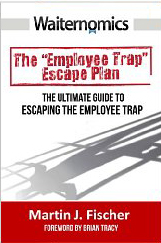
“Waiternomics” by Martin J. Fischer, edited by Thomas Hauck

Congratulations to my client Martin J. Fischer, who has just published his transformative self-help book, “Waiternomics: The Ultimate Guide to Escaping the Employee Trap.” A former Las Vegas waiter (he tells me that his Vegas stories could fill a separate book!), Martin made plenty of cash, but he knew that he was at the mercy of his corporate bosses. He escaped the paycheck prison and built equity in himself and his talents, and in this fast-paced book (which I had the honor to edit) Martin reveals his secrets for investing in yourself. Written with Brian Tracy and with a foreword by Dan Kennedy, bestselling author of the “No B.S.” book series, this book can help you to change your life.

Waiternomics

– Thomas Hauck is a Boston based book editor and ghostwriter.

Posted in Books Edited by Thomas Hauck, News | Tagged , , , , , , , , , , , , | Leave a comment

My Kevin Lone Novels and the Epistolary Format – Comment by Author Thomas Hauck

For the past few years I’ve been working on a series of spy thrillers. The protagonist is a covert agent named Kevin Lone, who works for a quasi-secret Beltway firm called Mars Risk Management (MRM). I’m currently seeking a publisher for “Avita Doesn’t Love You,” in which Lone battles a North Korean spy ring that is using a religious cult as a front.

The novel is written in an epistolary format. This means that it’s presented as a collection of third-party texts including newspaper and Internet accounts, MRM internal reports, and journals kept by the protagonists. A classic novel of the epistolary format is Bram Stoker’s “Dracula.” Here’s why I chose to write using this approach.

1. It takes me, the author, out of the equation. This is not my story, nor am I the omniscient narrator who reveals information to the reader. My flair as a writer is not the issue. I’m just the editor. I like it that way. I’m a big fan of Andy Warhol, who took the same approach.

2. It allows every character to assert themselves in the first person, much like the characters in a play. To me this is very important when moral issues are being discussed. For example, a key character is a North Korean spy named Hannah Minh. To me, it was important that her story be heard directly from her own lips. Not that this would excuse her crimes, but it would make her a human being and not just a cartoon character. Likewise, the “co-star” of the book along with Kevin Lone is a college-aged woman named Jessica Kenney, who fearlessly and perhaps foolishly embarks on a dangerous journey to avenge her father’s death. I wanted her to be able to tell her story in her own words.

3. Much of the book consists of Kevin Lone’s reports submitted to his boss, Lucy Gatling. But as we all know, reports tend to be factual. There are certain things you don’t say in a report to your boss. In the interviews with Kevin Lone that are also included, he speaks much more freely (in literary terms, he speaks in a different voice). We learn much more than if we just read the reports.

4. Perhaps most importantly, nowadays people get their information from multiple sources. When I was a kid we had Walter Cronkite. If Walter Cronkite said it, that was all you needed to know. The days of the single-voice news source are over. We get our news from TV, newspapers, blogs, YouTube, Twitter, and countless other sources. No one person has a claim to objectivity or to the “truth.” The same goes for the narrator of a story. There cannot be one truth as revealed by the omniscient narrator. Like it or not, we live in an era of multiple truths. To me, the only way to acknowledge this is to step back and let the characters report the story in their own words. Is this more challenging for the reader? Perhaps, but I hope that it’s also more rewarding.

Posted in Essays, News, Uncategorized | Tagged , , , , | Leave a comment

What Time Is It, Mr. Fox? “Little Bit of Blue” CD Review

“Little Bit of Blue” by What Time Is It, Mr. Fox? takes you to a smoky cafe where lonely lovers sip bittersweet absinthe, while over in the corner a piano player – accompanied by baleful strings, a smooth jazzy drummer and a sultry female quintet – provides the sound track to your romantic triumphs and disasters. Enter a world where Cee Lo Green meets Maurice Chevalier, soul meets jazz standard, and the crisp execution of classically trained musicians intersects with the heartfelt mysteries of the blues. In top hats and black suits, the aesthetic is curiously nineteenth century, but the polished production of this CD – beautifully recorded at Bang a Song Studios in Gloucester, Massachusetts – mark it as a thoroughly twenty-first century product.

Along with French love ballads, some influences are clear and intriguing. “Deep Waters” owes a debt to PJ Harvey’s creepy 1995 alt hit “Down by the Water,” but that’s what brands this effort as a pop creation; in pop music influences are traded and mixed and reborn as new songs. The glue that holds every song together is the assured singing of 3rian King (I suppose his friends call him the more prosaic “Brian”), which makes no attempt to fill an arena but rather draws you closer, as if he were handing you a snifter of brandy by a crackling fire.

The mood is indigo and the night is long, so put on your smoking jacket or Japanese silk robe, dream of lost loves and imagine new ones, and let this genre-defying collection take you across moonlit fields in a sleigh pulled by a team of cunning red foxes.

What Time Is It Mr. Fox


Posted in Essays, News, Uncategorized | Tagged , , , , | Leave a comment

Copyright, Fair Use, and “Spinning” – Advice from Thomas Hauck, Book Editor and Ghostwriter

I edit many personal self-help books. My valued clients are consultants, coaches, and personal development experts who write books in order to educate and uplift their readers, and also to attract clients.

The self-help universe is surprisingly small, and many of my book clients are inspired by self-help leaders including Tony Robbins, Stephen R. Covey, Ken Blanchard, Brian Tracy, Mihaly Csikszentmihalyi, and Viktor E. Frankl.

Often, my client will quote a famous self-help guru in his or her own book. Sometimes these quotes can be a paragraph or more. That’s when you need to start being concerned with copyright infringement.

When I see lengthy quotes, I ask my client to become familiar with copyright law, and especially the concept of fair use. Under the legal concept of fair use, you can reproduce short segments of another work if you are discussing it or reviewing it. The key thing to note is that the US Copyright Office says that “Copyright protects the particular way authors have expressed themselves. It does not extend to any ideas, systems, or factual information conveyed in a work.” This means that if you re-write or “spin” the original text and use different words to express the same idea, you are safe, and you need not even give a citation. Many self-help authors do this. They simply re-write the ideas expressed in other books.

The Copyright Office page on fair use is here.

The same applies to images or charts taken from other works. If you want to be assured of having ownership of your book and everything in it, you should simply have the images re-drawn by someone so that they are original. It may also be the case that certain ancient images are in the public domain. Photographs tend to be unique, so you can’t “re-photograph” the scene. But you can purchase the rights to original photos from a stock house. I urge my clients to never, ever use clip art or images from the Internet.

I’m not a copyright lawyer, so this is not legal advice. If in doubt, you should consult an attorney. The only way to not be in doubt is to make sure that you own every word and every image in your book.

Thomas Hauck ghostwriter, book editor, author

– Thomas Hauck, freelance book editor, provides a wide range of literary services to both first-time and established authors.

Posted in Business Books, Essays, Grammar and Writing Skills, News, Uncategorized | Tagged , , , , , , , , , , , , , , | Leave a comment

“Float” by JoeAnn Hart – Review by Thomas Hauck

Over the past two centuries the rough-hewn harbor city of Gloucester, Massachusetts has been home to an extraordinary number of creative artists and writers. This tradition continues today, and there is no better ambassador from Cape Ann to the literary world than JoeAnn Hart. Her new novel, “Float” (Ashland Creek Press), is a buoyant tale of human trials and tribulations set in the fictional town of Port Ellery, Maine. The tale’s rich bouillabaisse, which offers a new surprise with every spoonful, has been concocted using a sturdy recipe of zany characters, strange occurrences, a massive hurricane, and the best of intentions gone awry.

In keeping with the tradition of the arts in Gloucester, the book jacket features a captivating cover painting by Rocky Neck resident Karen Ristuben. With such talent on Cape Ann, why look elsewhere?

Among its many attributes, “Float” is a nifty course in creative writing that will cost you much less than enrolling in your local MFA program. Every sentence is crafted with care and polished to perfection – and the author’s goal is not to smooth away the rough edges, but to bring them into sharp, glittering relief.

In the interest of brevity I’ll reveal just one of the many devices used by the author to create her mesmerizing prose. It is this: The novel is set in a port town. The business of the hero involves fish processing. The theme of water, and of all things watery, pervades the book. The author therefore calibrates her choice of vocabulary to make sure that the chosen imagery remains front and center. At every opportunity, an action that could be described in ordinary terms is given a nautical twist.

Here are some examples. As you encounter them and many others in the course of the book, the pattern emerges:

“He was opening and shutting his mouth like a fish.”

“Like a cruise ship, Cora was not easy to turn around once she was set on a particular heading. She started throwing ballast overboard.”

“In a month?s time, the end of the day would seem to take place underwater, but for now the sun?s luster stirred up murky sediments in his brain.”

“Duncan’s financial crisis was now officially blood on the water, attracting bottom feeders and scavengers alike.”

The literary lesson here? To write a book you need to fill up the pages with words and ask people to read them; as a part of this very personal contract you owe it to your readers to offer images that reinforce and strengthen the aesthetic of the book. This approach is both subtle and masterful, and helps to carry the reader along as surely as if you were floating on a rubber raft down a fast-moving river. As the propulsive whitewater tosses you up and down, just hold on and enjoy the ride!

Float cover

Thomas Hauck is a book editor, ghostwriter, and occasional book reviewer based in Gloucester, MA USA.

Posted in Book Reviews, Essays, News | Tagged , , , , , , , , | Leave a comment

Using Fictional Stories to Sell Products or Services – Advice from Ghostwriter and Book Editor Thomas Hauck

If you’re intending to write or publish a business book, you might assume that what you need to do is present descriptions of your services or product, or provide instruction to the reader in the way a teacher would. But there’s another alternative that can be very powerful: telling stories that highlight the benefits of your service as well as the dangers of not using your service.

Think of your story as a long TV commercial or short film that has characters and a plot, just like any other story. The difference is that your story has a “moral” at the end, and the moral is that your product or service really works and can change lives.

When writing a fictional narrative about a product or service, my number one task is to deliver a story or stories according to these three specifications: the target consumer, the benefit of the product, and the product features. Those are the three elements every story needs. These three elements (user, features, benefits) must be presented in plain English in a way that anyone can understand. The fourth element that may be used is fear. Fear is created when you show the consequences of not using the product or service.

Let’s say you’re selling a new GPS app for a smartphone. The app makes it easy for you to meet your friends at a certain destination at a certain time. What better way to explain the product than with a series of stories? Think about the stories as mini-TV commercials. In a TV spot you’ve got 30 seconds to tell your story. It needs to be in plain English and easily understood by anyone.

In the story, I have ordinary GPS or some other app on my smartphone and I think that I have the best possible technology. And now you’re telling me that I could do better! You’re telling me that with minimal effort I could save time and lower my stress level, and meet my friends or colleagues at the right time at the right place, and even pre-order my meal. It sounds good, but I have questions. How does it work? Is it expensive? Is it reliable? Is it simple to operate? These are the questions I want answered.

And you know what? The very best person to answer these questions is my friend Sally. She’s already got the app, and she loves it! I saw Sally at dance class yesterday and she told me all about this new app and how it changed her life! Sally has zero tech skills. She’s an ordinary consumer. But she uses the app and it works great for her.

A story can be a fun and entertaining way to promote your product or service, and to get the consumer to understand very quickly how your product will benefit him or her in real life.

Thomas Hauck ghostwriter, book editor, author

– Thomas Hauck provides ghostwriting and editing services for both first-time and established authors. Contact Thomas today to learn more about how you can write and publish your own book.

Posted in Essays, News, Uncategorized | Tagged , , , , , , , , , , , , , | Leave a comment

How to Write a Great Business Book – Advice from Ghostwriter and Book Editor Thomas Hauck

A popular (meaning non-scholarly, non-MBA program) book that is aimed at business professionals must satisfy a few very basic requirements. Here is an outline of what you must accomplish with any business book, regardless of length or complexity.

1. As you create your book, the number one concept to keep at the forefront is that your readers are totally self-centered. They care only about how you can help them to solve their immediate problem. If you cannot provide practical, accessible solutions, they’ll toss your book out the window.

2. Therefore, your first task is to clearly state the problem that you can help the reader solve. For any business owner, the number one problem is how to make more money. Period. This goal can be accomplished in a variety of ways, including winning a big contract, increasing market share, increasing profit margins, cutting expenses, or introducing a new product or service. Regardless of the strategy or combination of strategies, the goal is always to make more money. If you are writing a fable you may, if you wish, use a metaphor for making money, like finding out who moved the cheese.

3. The specific problem that you say you can solve must resonate and be clearly defined. It may include increasing team effectiveness, lowering employee turnover, taking advantage of the internet for marketing, or strategic succession planning. Whatever the area of your expertise, you need to define the problem and show the consequences of allowing the problem to continue. This is the fear factor. You must say, “In today’s competitive business environment, if you’re doing it the old way, you’re going to be outperformed by your competitors.”

4. You must then assert the benefits of your solution. Regardless of the short-term benefits your solution can provide, the long-term benefit is always the same: increased profits. Period.

5. Then you need to describe your solution in plain English. Provide examples or tell stories to make your solution come alive. The reader must be able to say, “Yeah – this book describes my problem and I can see how to fix it!”

6. You are the expert. The reader does not care where your ideas come from. Do not tell the reader to go elsewhere for a solution. Please do not load your book with quotes by Jack Welch, Donald Trump, or Lao Tzu. I guarantee you that these same quotes are reproduced in thousands of boring business books. Your job is to stand out from the herd, not to be a part of the herd.

7. Don’t try to sell the reader. They’ve already bought your book, so you’ve got their attention and loyalty. Just tell them at the end of the book that if they need more information you invite them to contact you.

8. Don’t make the reader do an activity, like fill out a chart or make a list. No one has time for that kind of stuff, and most business people think it’s beneath their dignity. Plus, if they’re reading your book on a Kindle or Nook, they can’t fill out a form anyway. Remember that your reader is totally self-centered. They have paid their money for your book and they want you to do the work.

9. If you must use graphics, make sure they are incredibly simple. One corporate client of mine drew his own little circles and graphs with a pen. The images looked like a fifth-grader had drawn them, and they were incredibly effective. You could see at a glance exactly what he wanted you to understand.

10. Never ever use clip art. Never insert an image that is not unique to your book. The reader does not need to see a generic image of dollar bills in order to understand that you?re talking about money. Your book is not a PowerPoint presentation; it is a personal communication between you and your reader.

11. Do not use footnotes. Busy businesspeople do not care about your sources and do not want to interrupt their reading by going to the bottom of the page and squinting at a footnote. If you quote a source, say in your text, “According to the New York Times, fifty percent of all homeowners…” If you wish, provide a list of resources at the end of the book.

12. This is your goal: to get the reader to read your book and then hand it to a colleague and say, “You gotta read this book. It’s a fast read and it’s got some great ideas. We can discuss them at the next meeting.” Bingo! Your book has just sold itself. And chances are good that your phone will ring and the company will want to hire you for a consultation.

That’s it. Keep it simple. Describe the problem and offer your solution. Give your reader value and they’ll come back for more.

Thomas Hauck ghostwriter, book editor, author

– Thomas Hauck, book editor and ghostwriter, helps individual and corporate clients with a wide range of literary services designed to help you reach your goals.

Posted in Business Books, Essays, Grammar and Writing Skills, News | Tagged , , , , , , , , , , , , , , | Leave a comment

“Success 101: How Life Works – Know the Rules, Play to Win” – Thomas Hauck, Editor

Congratulations to my valued client Scott F. Paradis on the publication of his new book, “Success 101: How Life Works – Know the Rules, Play to Win” from Cornerstone Achievements. I had the pleasure to edit Scott’s sensational book, which reveals what you need to achieve your greatest desires, fulfill your potential, and create your destiny. Do you deserve more from life? Of course you do! (Don’t we all?) “Success 101: How Life Works” shows you how to embrace the opportunities that life offers. You don’t have to choose between wealth and love, health and career – you can have it all.

– Thomas Hauck, professional freelance book editor and ghostwriter, helps both new and published authors to reach their literary goals.

Posted in Books Edited by Thomas Hauck, News, Uncategorized | Tagged , , , , , , , , , , , , , , , , | Leave a comment