Thomas Hauck
Toggle Menu

How Long Should My Non-Fiction Book Be? Pages? Word Count?

One of the most frequent questions my valued clients ask me is how long their book should be. This is a complex question, and the answer depends on many factors. The bottom line is this: It should be exactly as long as it takes to tell your story. Not one word more or less.

Okay, that was the easy answer. Here are the variables that will influence your decision. For our purposes, we’rev talking only about non-fiction self-help books. Novels are a different story.

Word Count

In terms of readinng and writing a book, the first consideration is the word count. This is exactly what it sounds like: the number of words in your book. This determines how long it will take someone to read your book. Assuming the complexity is the same in both books, it will take you twice as long to read a 60,000-word book as a 30,000-word book. For a busy executive, that could make a big difference.

People read at vastly different speeds, but research suggests that 250 words per minute, or 15,000 words per hour, is about average. That would be two hours for a 30,000-word book, and four hours for 60,000 words.

Many business books are what I call “airplane books.” You get on the flight, settle in, read the book, and by the time you land you’re done. Unless you’re flying from New York to Los Angeles, this means you’re not going to be reading a 120,000-word Tolstoy novel in one sitting. Most business books come in at 30,000 to 60,000 words. Some are longer, some shorter.

Page Count

In a typical paperback book, you’re going to get 30 lines per page of 10 words each = 300 words per page. So 60,000 words would be about 200 pages. But you can manipulate this up or down by the size of the margins, the font, the line spacing, and if you leave blank pages between chapters. The thickness of a physical book is also influenced by the choice of paper. Cream paper, which looks and feels nicer, is thicker than white paper.

This is why in terms of the price for ghostwriting or editing, the page count is totally irrelevant. Any editor or ghostwriter who charges by the page is either a fool or a charlatan, because the number of words on a page can vary dramatically.

In ebooks, there are no pages, just a long scroll. No page count.

Your Budget

If you write your book yourself, it costs you nothing but time, and you can make your book as long or short as you wish.

If you hire a ghostwriter and/or editor, then the more words you want, the higher the price. It’s all about the word count! Never pay a ghostwriter or editor by the page!

Set your budget for your project. You’ll need a ghostwriter, a book designer for the interior (this could be very simple), a cover (must be very good – not cheap looking!), and a marketing budget. Beware of “package deals” from hybrid or subsidy book publishers. They are in business to make a profit and you’re going to be paying for managers who don’t actually do anything to add value to your book. If you can, act as your own project manager. You’ll have more control and you’ll save money, and you’ll also keep every penny you earn from book sales. (Hybrid publishers take a big chunk of your gross sales income and give you the scraps).

How Much You Want to Say

Here’s one more factor. In a self-help book, the goal is often to encourage the reader to contact you for more information or to engage your professional services. The book is like an advertisement for your business. That’s why it’s often not wise to tell your reader everything. Tell them just enough to deliver a solid value, but leave the door open for more. Deliver useful information while not being encyclopedic.

The bottom line is this: Your book must deliver value, not be boring, and be neither too long nor too brief. If you need help, consult a professional ghostwriter, book developer, or editor, and make a plan. Happy writing!

Thomas Hauck, best-selling ghostwriter and book developer
Thomas Hauck, professional book developer and ghostwriter
Posted in Advice on Hiring a Ghostwriter, Business Books, Grammar and Writing Skills, Self-Help Books | Tagged , , , , , | Leave a comment

ChatGPT Hit With Plagiarism Lawsuits

Are you considering using an AI algorithm such as ChatGPT to write a book? If so, there are many reasons not to do this, and to instead hire a professional ghostwriter.

One key reason is that the quality of your book will be poor. As the product of an artificial intelligence (AI) chatbot, your book will be nothing more than a rehash of the most common junk on the internet, and AI algorithms are notorious for being unable to discern between fact and fiction. There’s even a name for this terrible weakness: “AI hallucination” is a phenomenon wherein a generative AI chatbot or computer vision tool perceives patterns or objects that are inaccurate, creating outputs that are nonsensical or false.

Do you want your digital ghostwriter to be susceptible to AI hallucination? Certainly not!

Lawsuits Against ChatGPT Are Mounting

If that weren’t enough, human authors are starting to take legal action, charging OpenAI with plagiarism. George R. R. Martin, the author of the Game of Thrones book series, is among a group of 17 authors who have charged ChatGPT, a product of OpenAI, a Microsoft-backed company, with using their copyrighted novels to train the popular AI chatbot.

The collective lawsuit was filed by the Authors Guild, representing 17 authors, including Jodi Picoult, Jonathan Franzen, John Grisham, and George R. R. Martin. In the lawsuit, the authors allege that OpenAI copied their works “wholesale, unauthorized, or without compensation” and used them to train ChatGPT. The company allegedly trained ChatGPT on a dataset that included text illicitly uploaded from authors’ books to the internet, rather than using publicly available data, and that the authors are owed a licensing fee.

The lawsuit charges that the use of AI chatbots allows companies to create materials that “represent, mimic, summarize, or otherwise communicate” the works of authors. “These algorithms lie at the heart of Defendants’ massive commercial enterprise, and at the center of these algorithms is systematic theft on a mass scale.”

The case has garnered significant attention within the tech industry and intellectual property circles, as it raises fundamental questions about the ownership and originality of AI-generated content. ChatGPT harms the market for authors, say the plaintiffs, as it can mimic, summarize, or paraphrase their work, which amounts to copyright infringement.

The complete list of plaintiffs includes David Baldacci, Mary Bly, Michael Connelly, Sylvia Day, Jonathan Franzen, John Grisham, Elin Hilderbrand, Christina Baker Kline, Maya Shanbhag Lang, Victor Lavalle, George R.R. Martin, Jodi Picoult, Douglas Preston, Roxana Robinson, George Saunders, Scott Turow, and Rachel Vail.

The New York Times Vs. OpenAI

The New York Times has taken action. In August 2023, the NYT blocked OpenAI’s web crawler, meaning that OpenAI can’t use content from the publication to train its AI models. That means that if you use OpenAI to research or write your book, it cannot access the pre-eminent American newspaper.

NPR has reported The New York Times may be considering legal action against OpenAI for intellectual property rights violations. If it did sue, the NYT would be joining others including Matthew Butterick, a programmer and lawyer who alleges the company’s data scraping practices amount to software piracy, as well as Sarah Silverman and two other authors who sued the company in July 2023 over its use of Books3, a dataset used to train ChatGPT that may have thousands of copyrighted works.

So if you’re considering using OpenAI to ghostwrite your novel or non-fiction book, you might want to think about the possible legal ramifications.

Thomas Hauck, professional book developer, ghostwriter, and editor
Posted in Advice on Hiring a Ghostwriter, News | Tagged , , | Leave a comment

Top 5 Reasons Why Thomas Hauck Should Be Your Ghostwriter

Okay, it’s time for some shameless self-promotion! There are many reasons why you should hire a professional ghostwriter for your novel or non-fiction book, and many more reasons why that person should be me. But after much thought, to fit them into one post, I’ve narrowed down the reasons to the top five.

1. My Expertise

The job of the book developer or ghostwriter is multi-faceted. There are, of course, the mechanical skills of writing, including sentence structure, grammar, punctuation, and all the rest. But every book is based on an idea or a series of ideas. At Thomas Hauck Book Development, when you’re my valued client, I work closely with you to ensure that your ideas are conveyed to your readers in a way that’s professional, clear, easy to grasp, and entertaining. I never use any AI software such as ChatGPT because they only make your book generic, boring, and lacking in value to the reader. Also, there are an increasing number of plagiarism cases being filed against AI writing platforms – and you don’t want to get mixed up in those!

2. Depth of Experience

I started my writing career at my high school newspaper, and I’ve been a writer ever since. In 2007, I became a full-time, professional book writer, developer, and editor. It’s all I do, every day. I’ve ghostwritten, edited, or developed nearly 500 books in all genres, both fiction and non-fiction. (Full disclosure: I’ve never done a book of poetry.) Few writers of any genre have more experience than I do.

I’ve also had extensive experience in the publishing industry, dealing with literary agents and publishing house editors. It’s my job to ensure my author client is successful with his or her publishing partners, and that everyone is always on the same page, with the goal of publishing a successful, profitable book.

3. Passion for Learning

To be a successful ghostwriter, while you need to be generally well-informed, you absolutely must have a passion for learning about new topics and researching them. From behind my desk at Thomas Hauck Book Development, I’ve built my career on being able to learn about my clients’ subjects and write about them with authority. From retirement accounts to oil rigs, protein supplements to international banking, I’m ready to help you become the thought leader in your field.

4. Easygoing Personality

There are many experiences in life that are stressful, and writing a book should not be one of them! My business model is based on a no-pressure, pay-as-you-go model. Some clients want their books written ASAP, while others take a leisrurely pace. It’s all good! I’m always available for questions and planning sessions. I usually write in milestones or sections of 5,000 words each, and there are never any surprises. We have an outline, which is the game plan, but it’s flexible. There are never any reasons to worry. Your 100% happiness is my goal!

5. Dependability

Your book is important to you. It may represent a significant investment of your time and money. Too many times I hear clients tell me their previous ghostwriter or editor didn’t deliver, or was out of touch, or missed a deadline. To me, that’s crazy! I happen to love my work, and when I wake up each morning, I feel lucky that I’m able to spend the day writing or editing a book that may change someone’s life. It’s both an honor and a privilege to serve you, and you can depend on Thomas Hauck Book Development to deliver a manuscript that’s ready to publish!

I look forward to serving you!

Thomas Hauck, professional book developer, ghostwriter, and editor
Posted in Advice on Hiring a Ghostwriter, Essays | Tagged , , | Leave a comment

“The Power of Strategic Influence” by Gary C. Laney

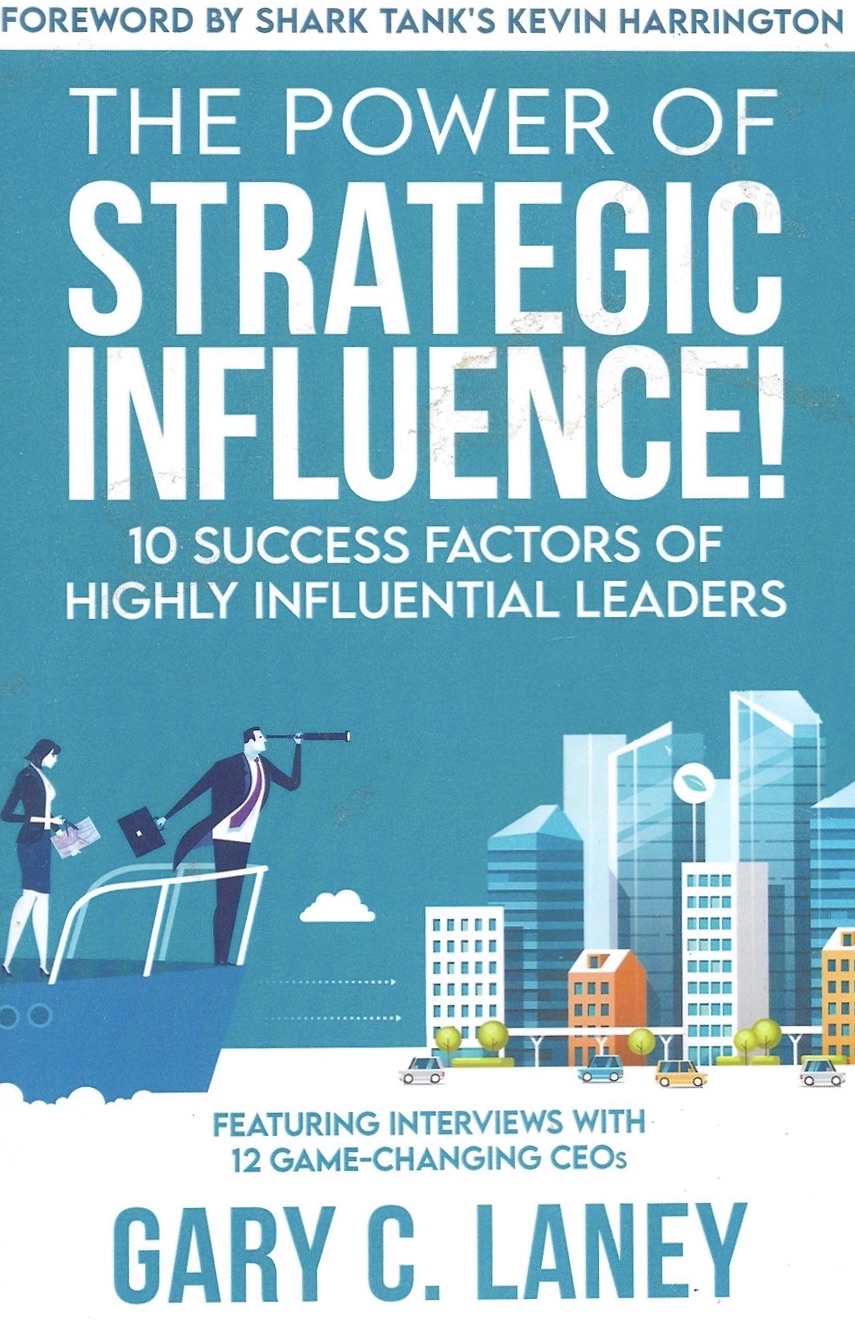
My valued client Gary C. Laney is experiencing tremendous success with his breakout book, The Power of Strategic Influence: 10 Success Factors of Highly Influential Leaders. With a foreword by Kevin Harrington, who rocketed to fame through his role as an original Shark on the TV show Shark Tank, Gary’s book presents a powerful, step-by-step formula for developing and excercising personal influence in business and the community.

A Book with a Powerful Message

When you think about it, having personal influence over others is the true key to success. Imagine two inventors. Each has an innovative new invention that could change the lives of millions of people.

John Inventor is a shy, retiring type of person with a limited circle of friends and colleagues, and doesn’t understand the dynamics of personal influence. He’s passive, and just thinks that “things will take their course.” When he’s ready with his invention, he doesn’t have a clue as to how to leverage its possibilities.

Mary Inventor is an outgoing, confident person who, through her involvement in her community and industry, has built a wide circle of friends, colleagues, and strategic partners. When she’s ready to promote her invention and seek investors and distributors, she hits the ground running.

Who will be more successful? Mary, of course!

One of the key points that Gary makes in his book – his guided tutorial, really – is that you build your strategic influence by helping other people solve their problems. It’s not a self-centered way of life, where you strut about, telling people what to do; to the contrary, it’s all about giving to others and forming lasting bonds of trust.

Interviews with Leading Influencers

But you don’t have to just take Gary’s word for it! Included are his exclusive interviews with 12 game-changing CEOs and entrepreneurs who have, over time, built their own circles of influence. Like the avatar of The Power of Strategic Influence, who arrives in a strange city with no connections and no prior knowledge of the people who live there, these dozen leaders started out with nothing and, through steady networking and the forming of strategic partnerships, achieved enviable success. They blazed a trail that you can follow!

“The Power of Strategic Influence” by Gary C. Laney

Posted in Books Developed by Thomas Hauck, Books Edited by Thomas Hauck, Business Books, Self-Help Books | Tagged , | Leave a comment

“Higher Purpose Venture Capital” by Ron Levin

On September 13, 1970, in The New York Times, economist Milton Friedman published an article entitled, “A Friedman Doctrine: The Social Responsibility of Business Is to Increase Its Profits.” He began his article with a direct broadside at corporate social responsibility:

“The businessmen believe that they are defending free enterprise when they declaim that business is not concerned ‘merely’ with profit but also with promoting desirable ‘social’ ends; that business has a ‘social conscience’ and takes seriously its responsibilities for providing employment, eliminating discrimination, avoiding pollution and whatever else may be the catchwords of the contemporary crop of reformers. In fact, they are—or would be if they or anyone else took them seriously— preaching pure and unadulterated socialism. Businessmen who talk this way are unwitting puppets of the intellectual forces that have been undermining the basis of a free society these past decades.”

Friedman insisted that the exclusive owners – and beneficiaries – of a business are its shareowners. Everyone else connected with the business is an employee, including the CEO, even if he or she is the founder and guiding visionary. Because the managers of the business are handling someone else’s money, they’re obliged to not waste it on frivolous “feel-good” activities that do not produce an immediate cash return on investment.

Friedman wrote: “In each of these cases, the corporate executive would be spending someone else’s money for a general social interest. Insofar as his actions in accord with his ‘social responsibility’ reduce returns to stockholders, he is spending their money. Insofar as his actions raise the price to customers, he is spending the customers’ money. Insofar as his actions lower the wages of some employees, he is spending their money.”[i]

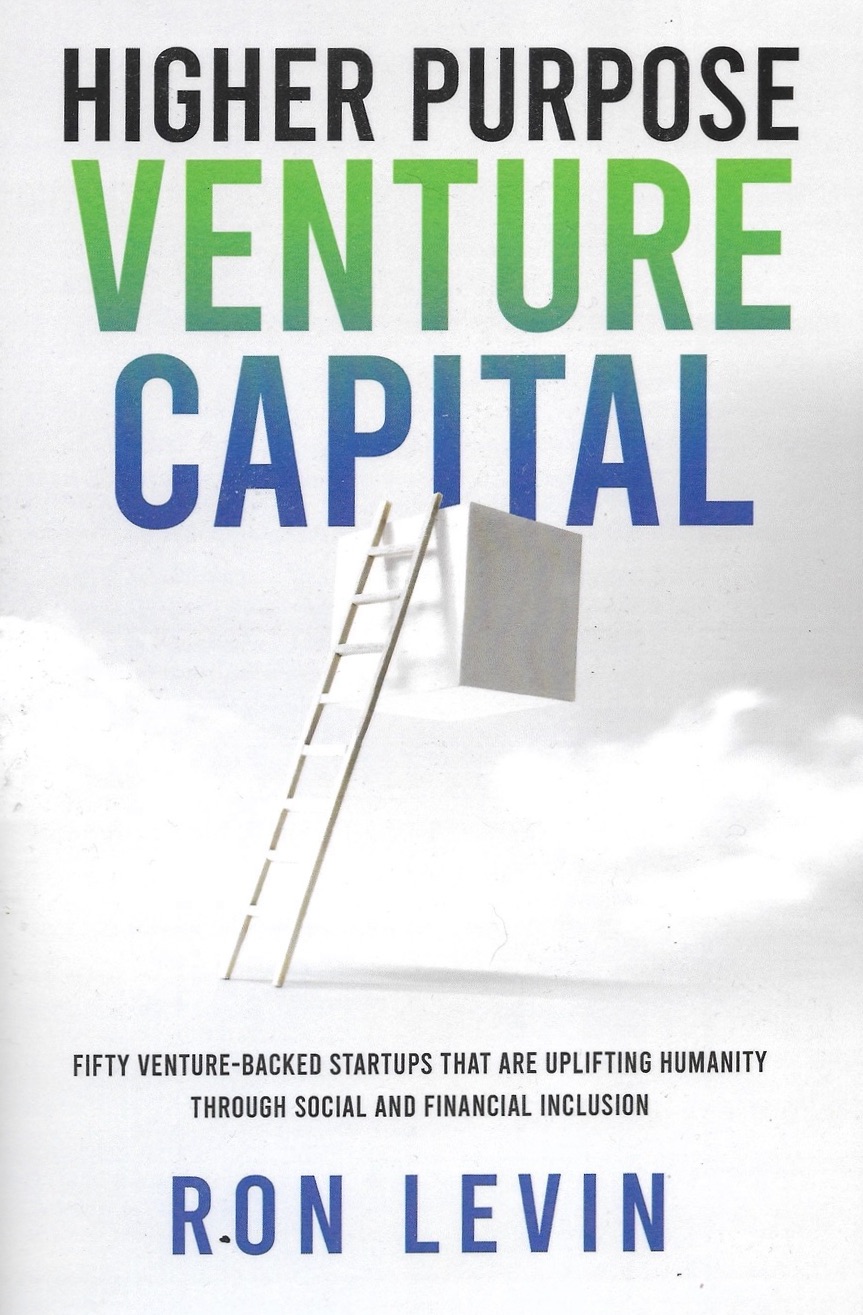
Fortunately, we now know that this so-called “Friedman Doctrine” was horribly myopic, and today’s investors see “the big picture” with much greater clarity. As my valued client Ron Levin reveals in his powerful new book, Higher Purpose Venture Capital, socially responsible businesses and their investors have two key characteristics:

2. Today’s investors are concerned with more than the fastest possible cash return. Today’s world is full of thoughtful, smart people who look at the overall potential for good that capitalism can produce. They are concerned about receiving a solid return on their investment (who wouldn’t be?), but they actually care about how that return was earned. They want to leverage their investment to, at the very least, do no harm, and at the very best make a positive contribution.

3. Socially responsible businesses can be just as profitable as regressive businesses. Perhaps Friedman’s biggest lie was the assertion that managers who invest in socially responsible aspects of the enterprise are less astute or less mindful of profitability than those who are concerned only with the immediate, end-of-quarter cash return. This is ridiculous. The companies that provide substantial returns year after year are often those that make investments in their people, their environment, and their community.

Even with the necessity of the profit motive—which is non-negotiable—there’s an absolute bottom line, in the form of two questions posed to an investor:

“Do you want to use your investment funds to help make the world a better place while fairly sharing in the rewards of doing so?

“If you were ninety years old and your grandchild came to you and asked, ‘What did you do with your money?’ What would you say?”

Higher Purpose Venture Capital is not just a book of theory. It’s a very practical guidebook! Levin presents a portfolio of socially responsible startups that are open to investors. You can dive in and learn about exciting possibilities today… and how to spot emerging opportunities tomorrow.


[i] NYTimes. https://www.nytimes.com/1970/09/13/archives/a-friedman-doctrine-the-social-responsibility-of-business-is-to.html

Posted in Books Developed by Thomas Hauck, Business Books | Tagged | Leave a comment

“Highwire Act & Other Tales of Survival” by JoeAnn Hart

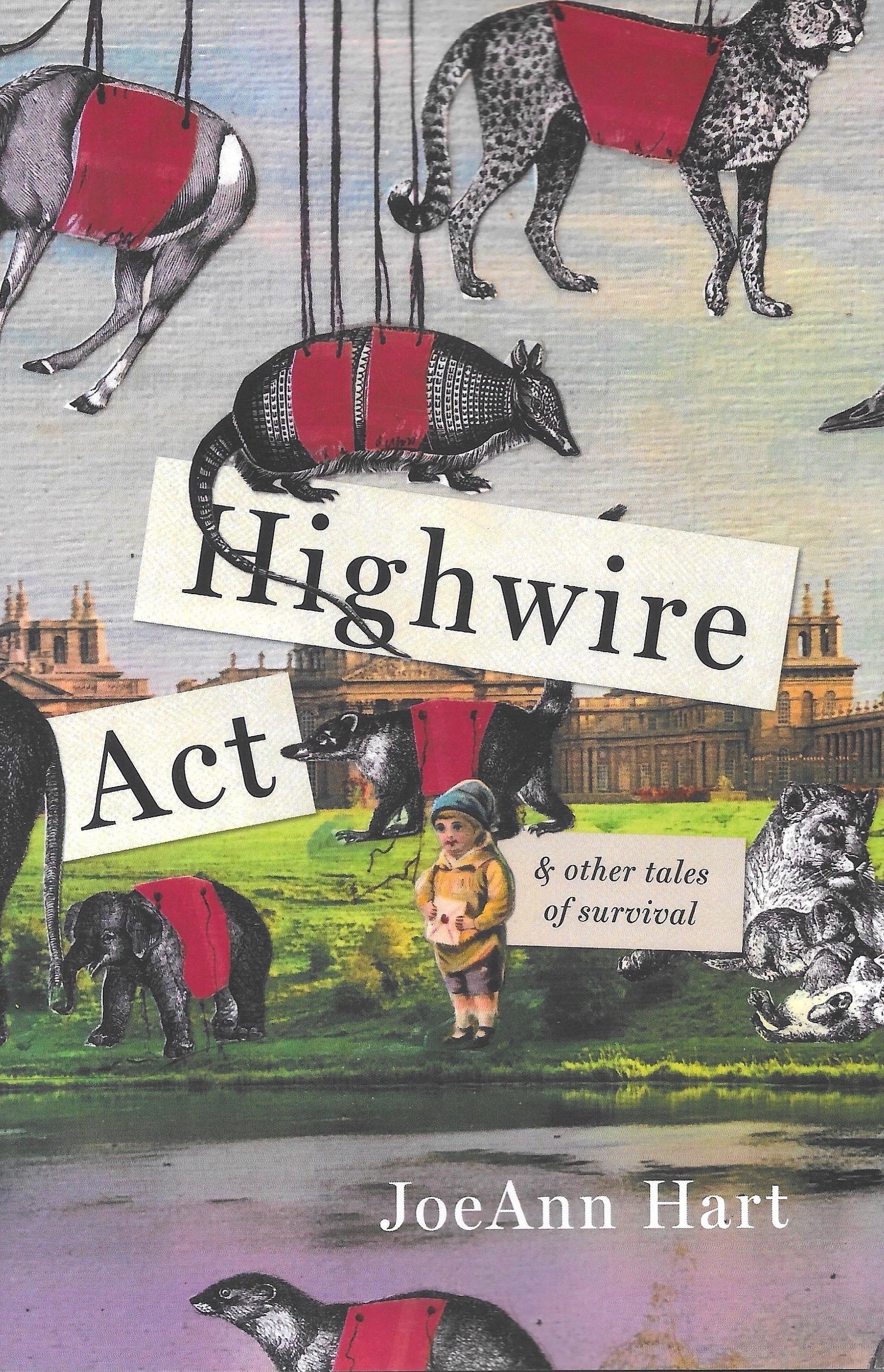
Congratulations to our family friend and neighbor JoeAnn Hart on the publication of her collection of eighteen short stories, Highwire Act & Other Tales of Survival. This captivating and beautifully written ensemble resonates with recurring themes of change, both in our climate but also in our emotions and politics.

The stories are varied, collected like stray woodland creatures wandering onto a farm looking for a home. All have been previously published in leading literary journals; the earliest, “Woodbine & Asters,” first appeared in Prairie Schooner in 2006. I mention this to assure the reader that these stories are the best of the best, having stood the test of time; as any artist knows, the work you create today is always exciting and the one you hope people will wildly applaud; but the most meaningful art is allowed to ferment and – hopefully – grow more potent with age.

JoeAnn’s characters do not have an easy time of it! She puts them to the test, and they face a slew of personal challeges including mental illness, Covid-19, grief, climate change, and ecological disasters. While as a writer her craftsmanship is unequalled, this is no “cozy” collection; instead it’s as beautiful and bracing as a walk along Good Harbor Beach in early spring, before the tourists arrive, with the wind howling and the grey surf pounding under the warming sun.

Congratulations also to Gloucester artist Hans Pundt for designing the arresting cover art. Highwire Act & Other Tales of Survival is available from Black Lawrence Press and The Bookstore in Gloucester, MA.

Posted in Book Reviews | Leave a comment

“Get Off Your Cushion: Weaving Meditation into the Fabric of Life” by Li-Anne Tang

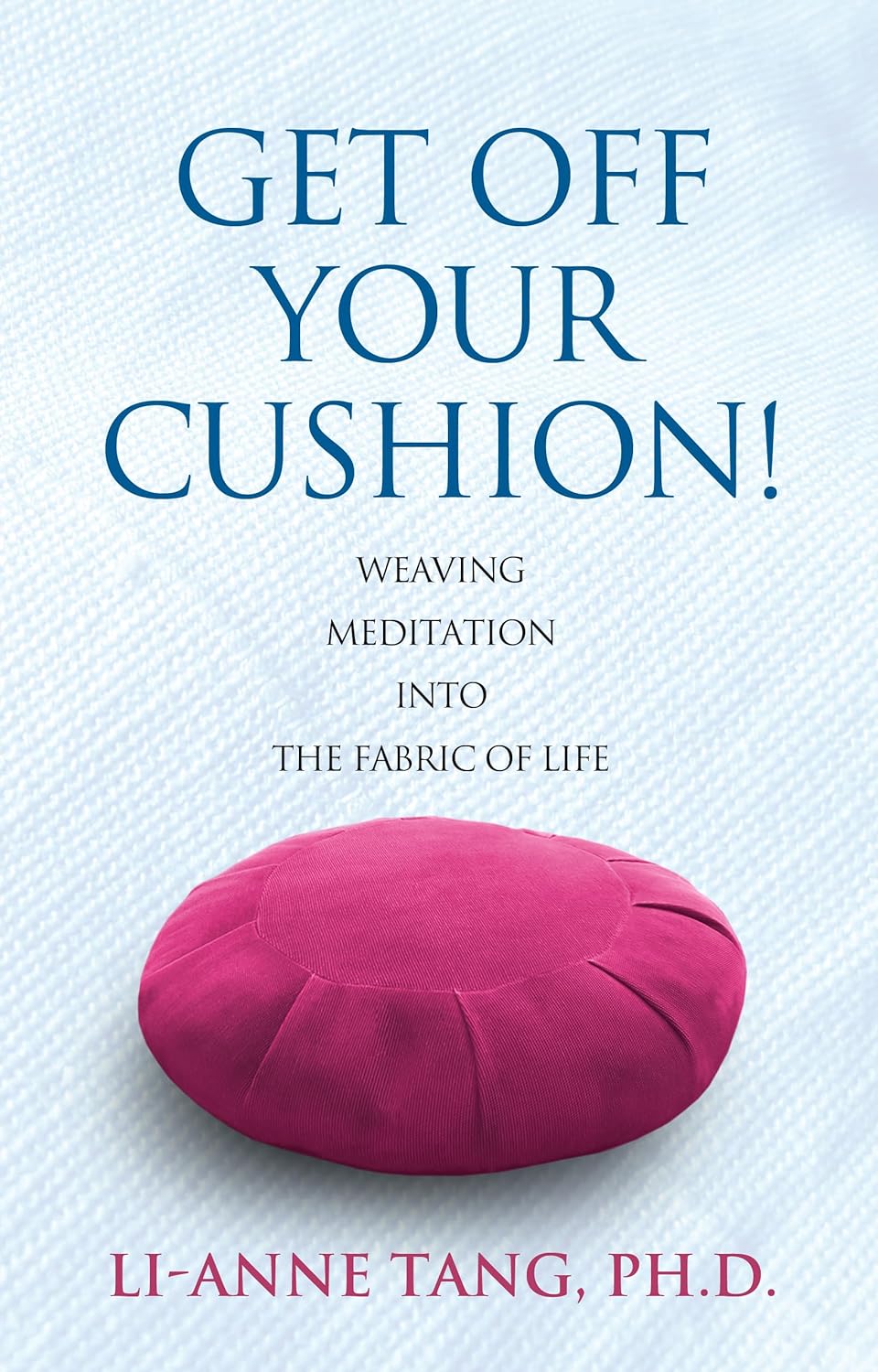
Congratulations to my valued client Li-Anne Tang, Ph.D., on the publication of her new self-help book, “Get Off Your Cushion: Weaving Meditation into the Fabric of Life.” The title is self-explanatory! While millions of people recognize the value of meditation in all its forms, too many think of meditation as something that you have to do deliberately and in a pre-determined physical setting. You have to set aside time, they think, and assume a particular posture, such as sitting cross-legged on a cushion on the floor. This means you’re removing yourself from everyday life – stepping outside, so to speak. You’re clearing a space free of distractions to alow your mind and spirit to wander (or focus, as the case may be).

That’s fine, but Li-Anne Tang wants us to look at meditation differently – not as a practice set aside or divorced from “real life,” but something you can weave into your daily activities. Why not bring a meditative approach to your work, your home life, your recreation?

As the book blurb says, whether you want to use meditation to ease anxiety or set yourself on the path towards spiritual enlightenment, with “Get Off Your Cushion” you can learn how to move from stress to serenity in the moment, cultivate continuous mindfulness from dawn to dusk, apply Buddhist teachings to all aspects of everyday life, and ease your suffering.

Reconsider the old habit of meditating only by sitting cross-legged on a cushion! This book can be your guide to bringing meditation to every experience of your life, and show you the path to spiritual awakening.

Posted in Books Developed by Thomas Hauck, Self-Help Books | Leave a comment

Congratulations to Dr. Lisa-Leslie Williams on the publication of “Be FINE: Your Drug Free Prescription to Age Well, Beat Bulge, and Stop Disease”

My valued client, Dr. Lisa-Leslie Williams, has just published her wonderful and groundbreaking book, Be FINE: Your Drug Free Prescription to Age Well, Beat Bulge, and Stop Disease. It’s chock full of ideas and information that can help you live a longer, healthier life without resorting to harmful drugs.

What sets this book apart is Lisa’s boundless exuberance and love of life that comes through on every page. Her Caribbean heritage is the foundation for her approach, and the book is liberally laced with family stories that will both touch your heart and uplift your soul.

And even more, she includes a collection of delicious Caribbean-inspired recipes that are easy to make and super healthy. You can look at this book as a sort of one-stop shop of health advice, fun, tasty recipes, all served up with her unmistakable Caribbean flair. Enjoy!

Posted in Books Developed by Thomas Hauck | Tagged , , | Leave a comment

I Will Fix Your Lousy AI-Generated Document!

It’s astonishing, but just in the past few months many of my valued clients have sent me files of text – some of them short books with as many as 20,000 words – asking that I edit them. I read the document and then I write back: “Was this written by an artificial intelligence algorithm?” There are many of them competing for your business, including ChatGPT, Jasper.ai, Ryter, Copy AI, Writesonic, GrowthBar, Closercopy, Article Forge, ParagraphAI, and more.

“You can tell it’s AI writing?” they reply.

“Yes, after reading just a few paragraphs. There are many telltale signs.”

Here are just a few dead giveaways that signal low-quality, AI-generated text.

  1. Generic information. A low level of specificity, like looking through a window that’s fogged.
  2. Repetition. The algorithm acts like a bad ghostwriter who needs to crank out the words to fill the page. A hallmark of quality professional writing is the freshness and variety of the text. Once you say something, you don’t repeat it.
  3. In non-fiction self-help or business books written by artificial intelligence software, you’ll see an absence of citations or direct quotes. In professional writing, these make your document or book shine and give it validity.
  4. Lack of humor. AI bots are like, well, machines. A truly humorless bunch. Allowing for a few smiles here and there in the text are not part of their rigid training.
  5. Dogged, repetitious formatting. For example, introductory phrases are often repeated needlessly, because the AI bot doesn’t understand that the human reader can easily remember context.
  6. Wrong information. AI algorithms will find information online that at first glance may seem relevant and accurate, but when you read it closely you see that it’s not what you want and is even misleading.
  7. And one more thing… I’m a far better researcher than any AI algorithm. I know how to dig through the internet and get the information my client needs. When you want to follow the trail of a scent, you hire a bloodhound, not a toy poodle!

Recently a client sent me a book manuscript of 18,000 words. It had been written by ChatGPT. He asked me to add another 12,000 words to make it a real book. But first I had to edit the ChatGPT text. After removing the needless repetition, it was down to 9,000 words! This means that fully one-half the text was zero-calorie filler with no nutritional value. No human reader would have bothered slogging through that morass of boredom. After editing, I had to add 21,000 words to bring the manuscript up to the target word count of 30,000. Not a problem for me!

The moral of the story? If you’re serious about communicating your ideas to your readers and establishing yourself as a leader and not a follower – a lion and not a sheep – then let the AI bots write your memos and provide internet SEO fodder that no one will read anyway. For serious work that you want your readers to love, stick with a professional human writer!

Thomas Hauck, professional book developer and ghostwriter
Posted in Advice on Hiring a Ghostwriter, Essays, Grammar and Writing Skills, News | Leave a comment

Artificial Intelligence Editing Services: The McDonald’s of Literature

Ah, the modern world! So many new technologies that make our lives easier! Some of the most interesting emerging services provide manuscript editing powered by artificial intelligence. A good example is ProWritingAid, which analyzes your text and not only flags obvious spelling and grammatical mistakes – which we’ve seen for years – but makes suggestions for how to re-phrase and even embellish a sentence. The AI algorithm figures out what you want to say and provides a list of acceptable alternatives. It’s easy! As the guy in the 1-800-GOT-JUNK commercial says, “All you need to do is point,” and you’ll have an acceptable document.

AI Editing for Everyone

The good thing about such AI editors is that they make basic editorial cleanup available for anyone. Companies, for example, churn out billions of words every year. They publish blogs and white papers and reports, and these documents need to appear professional and free from errors. Before releasing them, it doesn’t hurt to run them through an application like ProWritingAid to ensure they meet a minimum standard of quality. The service is fast and cheap, and produces a predictable product.

The Fast-Food Editor: Bland Uniformity

If this sounds like a fast-food solution to editing, you’re right. Take McDonald’s, for example. The mission of McDonald’s is to make acceptable, edible food available to everyone at a low price. If you have five bucks in your pocket, you can get a burger and fries at McDonald’s. You can go nearly anywhere in the industrialized world and get the same burger and fries. But this approach has serious limitations. At any fast-food restaurant, you’ll never get a hand-cooked, premium meal. You’ll always be served what the kitchen scientists at the corporate office think you should eat. And what you consume is the same stuff that millions of other people are consuming. This is not a defect of McDonald’s, but a feature.

Services like ProWritingAid, Grammarly, WordVoiceAI, AuthorONE, and many others have the same constraint. They’re designed to deliver bland, uniform results according to the algorithm. This may work well when you’re a corporate communications officer looking for fast and cheap proofreading of your quarterly report. But if you’re writing a book with your name proudly emblazoned on the cover, and you want to deliver a premium product that will rise above the crowded market, the last thing you need is AI powered editing. You don’t want to serve your readers a McDonald’s fast food experience. You want to give them a gourmet meal they’ll never forget and which may even change their lives.

Go to ProWritingAid when you want a fast, cheap product. But when you need quality, hand-crafted editing that transforms your self-help book, business book, or novel from a commercial burger to a premium gourmet meal, you need a professional human editor. I look forward to hearing from you!

Thomas Hauck, professional (human!) book developer and ghostwriter
Posted in Advice on Hiring a Ghostwriter, Business Books, Essays, Grammar and Writing Skills, News, Self-Help Books, Uncategorized | Leave a comment